When I was growing up in Bath, there was a strange reluctance to make anything of the author’s links with our hometown. The line usually repeated was “Jane Austen hated Bath” – often with the added comment “She wasn’t here for long anyway”. As though: “There’s nothing to see here, move along”. The author’s relationship with the city was always downplayed or treated as something of a joke.
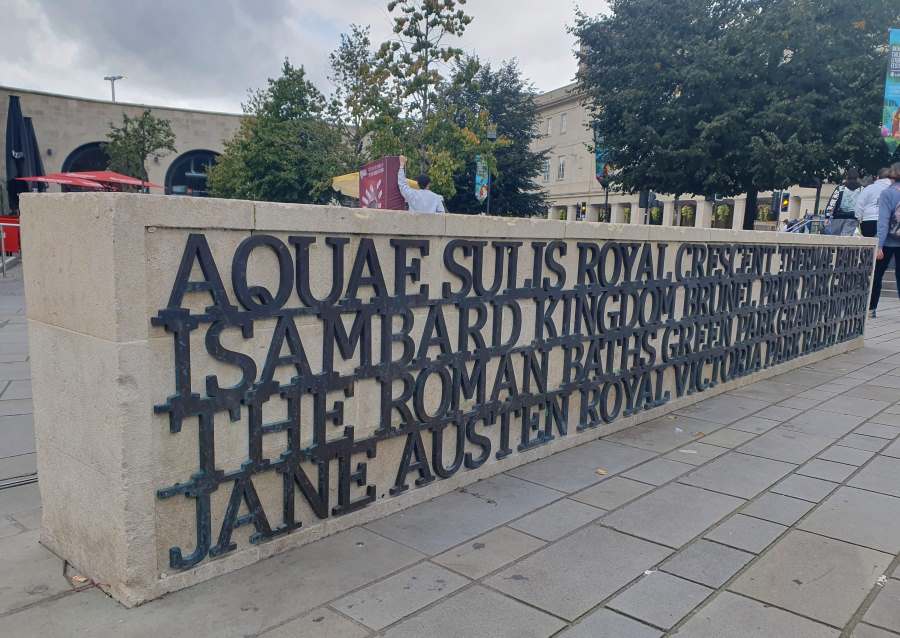
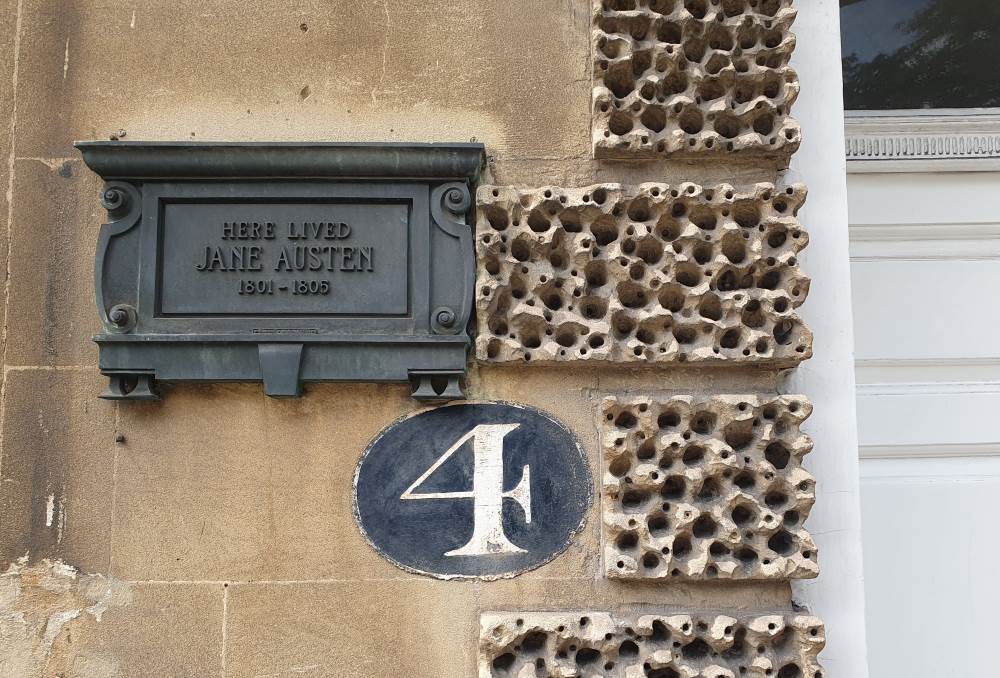
I don’t remember any celebration of Jane Austen in Bath back then. Even now, the only official civic recognition I can think of is one small plaque outside just one of her former dwellings in the city, placed many years ago, and the recent inclusion of her name on a list of words (bathroom décor style) on street furniture near the railway station. No central monument, statue or public museum, no streets or buildings named after her. Nothing to see here. Maybe this is partly because she was a female author, read and loved by more women than men, creator of quietly witty, unflashy books sometimes dismissed as trivial. And to be fair, Austen would probably have disliked public adulation or grand monuments.
Despite what we were told, Bath was actually extremely important in the lives of Jane Austen and her family. The greater part of two of Austen’s novels, Northanger Abbey and Persuasion are set in the city, and constructed upon the unique nature of Bath society. The author’s relationship with Bath was a complicated one bound up with her personal circumstances and tragedies, but reading her novels and letters it is obvious that Jane Austen appreciated aspects of life in the city, that Bath provided inspiration and stimulation and that her literary career would not have been what it is without her experiences of Bath, good and bad.
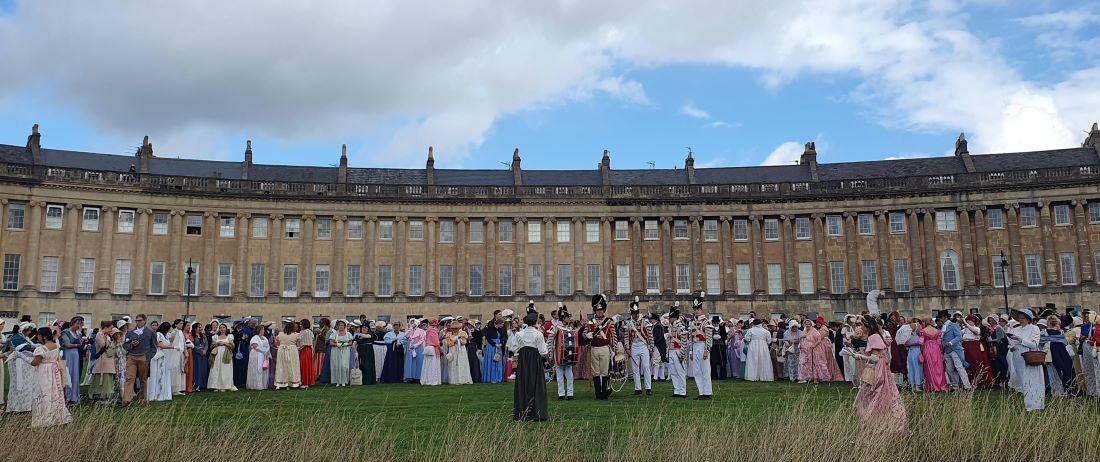
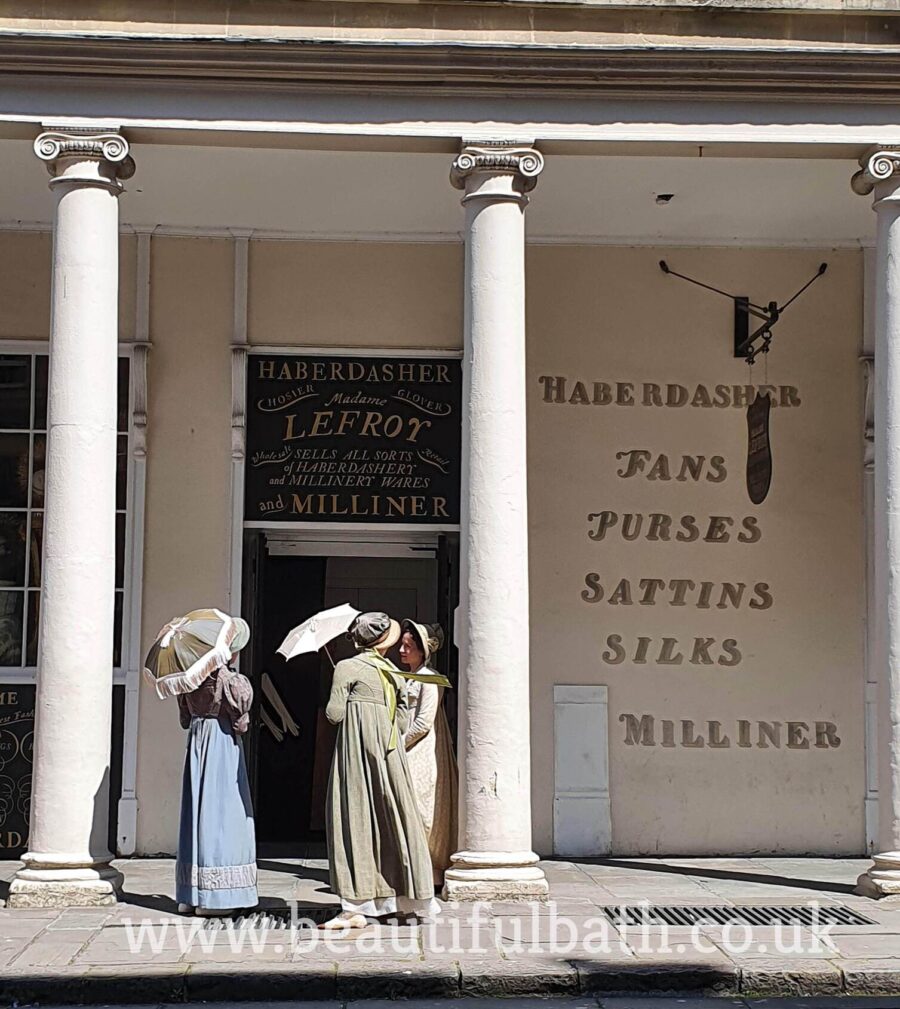
It took a private commercial enterprise in the era of internet fandom to create a Jane Austen industry here in Bath: an ‘information centre’ type museum, then a festival which now brings thousands of Janeites to the city each autumn. Nowadays there has been much more investigation and acknowledgement of the influence of Bath in the writings of Jane Austen and the times she spent here. Seeing thousands of literature and history fans from all around the world parade through Bath dressed in Regency costumes, and the festival’s programme of sold-out talks and events dedicated to Jane Austen and her world makes a colourful contrast to those years of neglect.

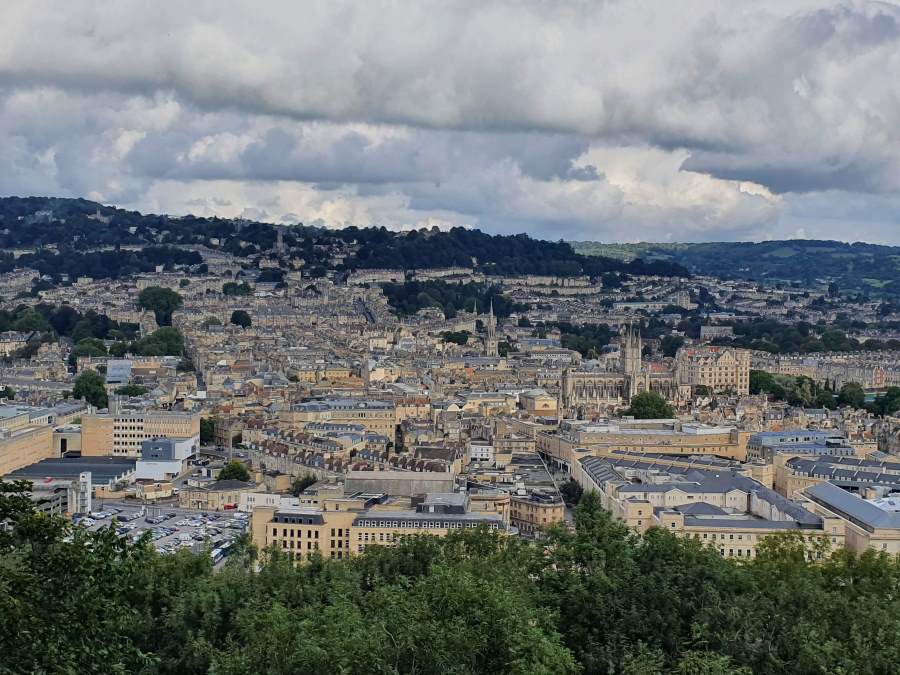
Whether you’re into dressing up in authentic Regency fashions and dancing at balls, or prefer to visit independently and explore Jane Austen’s Bath in a more low-key way, you’ll find plenty of ways to celebrate and study the author during a stay in Bath. The city’s famous Georgian architecture provides a setting ideal for immersing yourself in the past. Many streets and buildings are little-changed since Austen’s day and it’s both easy and insightful to follow in the footsteps of Anne Elliot, Catherine Morland and Jane Austen herself. Sights of interest include the addresses where Jane Austen lived in the city, the grand streets where she situated her characters, the quiet walks and rural views she enjoyed and the scenery she knew so well.
In these pages I’ll provide ideas for discovering Jane Austen’s Bath, including her homes and the settings she used in her novels. Have you enjoyed some of the TV and movie adaptions filmed in Bath over the years? I’ve included some guides to filming locations, where you can relive your favourite scenes.
Walks, locations and further reading
- A Persuasion walking tour – a self-guided walk exploring the settings Jane Austen used in this quiet, masterly novel
- Jane Austen Festival – an annual celebration of all things Austen in Bath
- 2025 Jane Austen Festival – photos and more
- Persuasion (1995) filming locations – a guide to the locations used in the BBC’s 1995 adaptation starring Amanda Root
- Persuasion (2022) filming locations – a listing of the locations used by Netflix for their controversial adaptation starring Dakota Johnson (you can also read about my experience watching the movie being shot)
- Jane Austen: A Life by Claire Tomalin – thorough and detailed biography (Amazon affiliate link)

Jane Austen’s Bath addresses
Jane Austen’s connection with Bath predates her birth, since her parents married here. Later the young writer visited her well-off uncle and aunt, who lived here, and stayed with her brother who was ‘taking the waters’ for medicinal reasons. Her longest period of residence came when her father retired. Without consulting Jane or her sister Cassandra, both dependent on their parents, he and her mother decided to hand their beloved rectory home over to Jane’s brother James and move with their daughters to Bath. So Jane was an unwilling resident from the start, and when her father died here and she had to move between increasingly cheap and uncomfortable lodgings, Bath was fixed in her mind as a place to escape.
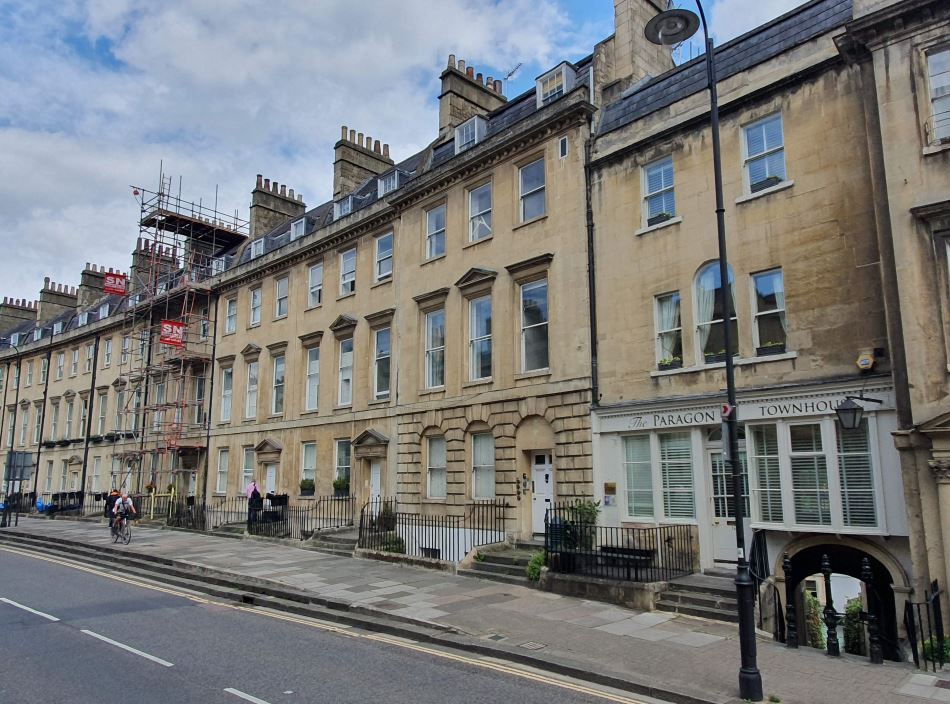
1 Paragon Buildings (1797, 1799), the home of Uncle and Aunt Leigh Perrot. Jane stayed with them when first visiting Bath, and again when helping to house-hunt. It was probably her first November 1797 visit that inspired her to write the Bath scenes of Northanger Abbey.
13 Queen Square (1799). Jane and her mother stayed with her brother Edward and family. Edward had rented accommodation for a month while taking medical treatments and enjoying the pleasures of Bath.
4 Sydney Place (1801-1804), ‘home’ for three years. Opposite the Sydney Pleasure Gardens and a short level walk into the heart of town, this must have been a fairly appealing and convenient place to live.
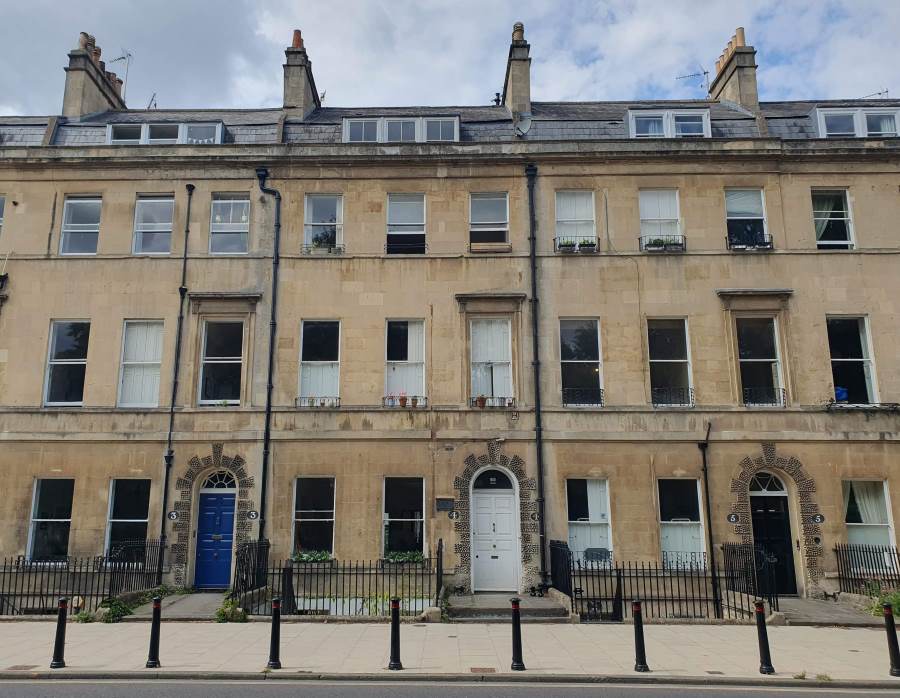
3 Green Park Buildings East (1804). Jane had previously had reservations about feverish illnesses arriving from this damp riverside location, though the green spaces must have been appealing. Soon after moving in, her father caught a fever and died, leaving his wife and daughters not only bereaved but also very poor. The Austen’s one-time home was destroyed in WW2 bombing, but the matching western terrace is still standing.
25 Gay Street (1805). Jane, Cassandra and Mrs Austen lodged on the first floor.
Trim Street (1806). Possibly number 7; the exact building is uncertain. Most of the street has subsequently been demolished and rebuilt. This was a rough area of Bath in those days, as the three women were no longer able to afford better lodgings. They moved away from Bath in 1806, and Jane later wrote that this was “with what happy feelings of escape!”
Stay with Jane
Bath’s city centre is small and walkable, as long as you are prepared for the occasional uphill trek, like Anne Elliot. You can discover Jane Austen’s Bath effectively from any central accommodation. But if you really want to follow in Jane Austen’s footsteps, you might like to stay in one of her former lodgings, her Sydney Place home or other Austen-adjacent accommodation. Here are some ideas (links are my affiliate links so will support this webste):
- Jane Austen’s Family Home in Bath – proudly trading on its famous literary connection, this holiday apartment at 4, Sydney Place is about as Jane-adjacent as you can get. Admittedly, this lower-ground floor basement apartment would have housed the kitchen or servants’ quarters in the Austens’ day, rather than rooms the family would have used themselves.
- No. 1 The Paragon – A smart adults-only apartment on the first-floor, this will give an experience more akin to that enjoyed by Jane during her first couple of visits to Bath. She stayed in this central building with views then owned by her Aunt and Uncle Leigh-Perrot. Explore and get to know Bath from the same base as she did!
- The Paragon Townhouse – At 1A, The Paragon, directly alongside the house where Jane stayed (above), this well-reviewed Georgian townhouse has six floors, four bedrooms and many stairs, and will give the experience of Georgian living.
- The Queensberry Hotel – Right in the heart of fashionable Georgian Bath, this smart boutique hotel isn’t on a street where she lived but it’s still in prime Austen territory. The Assembly Rooms are just down the road, and Lady Russell in Persuasion stayed on a neighbouring street.
- The Francis Hotel – Before the family moved to Bath, Jane and her mother stayed for a month on the south side of Queen Square in a big corner house rented by her well-off brother Edward. On the same side of the square, the Francis Hotel is a conveniently central base.
- The Royal Crescent Hotel – Bath’s most aspirational address, the Crescent is naturally name-checked in Jane Austen’s novels, and features in TV adaptions of her work (the Elliots’ house is in the street in the Netflix movie). This luxury 5-star hotel offers themed afternoon teas and has a garden.
- Bath’s Most Illustrious Address – A cute garden (basement) flat, this conveniently-located accommodation is between the Royal Crescent and the Circus and is stylishly decorated with a period feel.
- Full search of Bath accommodation – Book via the links on this website and you will be helping to support this website. Thank you!