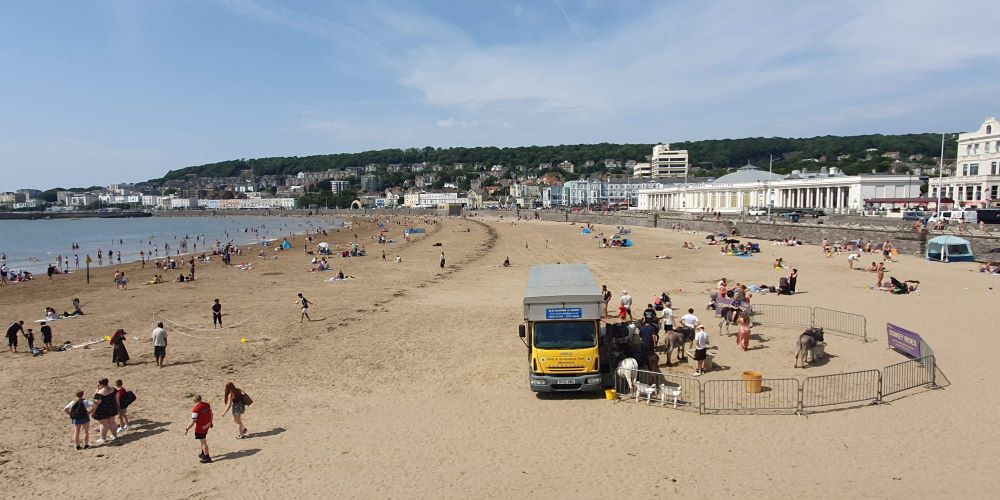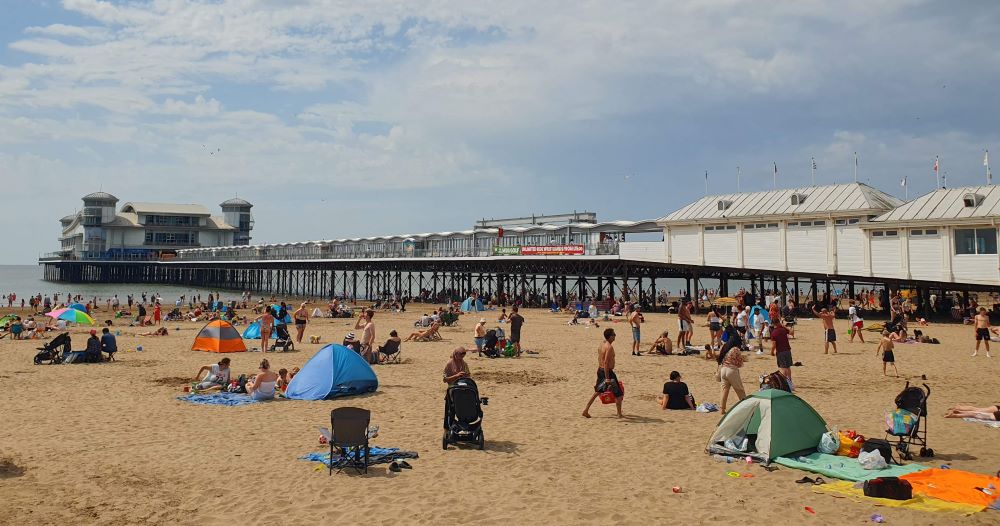
Weston-super-Mare is the traditional seaside destination for the Bath area, its name conjuring up memories of childhood trips to play on the muddy beach and ride on Weston’s famous donkeys. Beyond the fond nostalgia, Weston’s charms may seem a little humble and unappealing in these days of bargain trips to foreign sunshine. But Weston-super-Mare is still an easy day trip from Bath, and still has many of the attractions of a traditional British seaside resort, so it would be over-hasty to dismiss it out of hand. On summer weekends, families still catch the train to the seaside armed with buckets, spades and beach paraphernalia.
With a beach that more resembles mud flats at low tide, when the sea is no more than a distant rumour, Weston is certainly not among the most pretty or sandy of English beaches. On a sunny day, though, when the tide is higher and families play on the sand and in the water, it has all the cheerful charm of British summer holidays of days gone by.
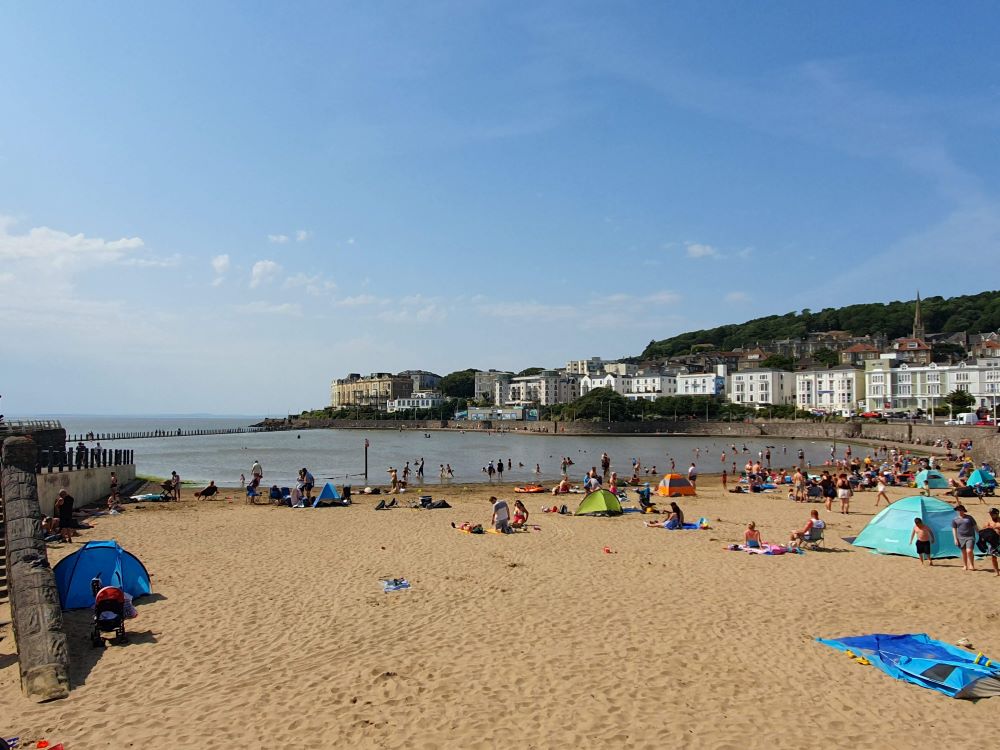
Weston’s bay faces onto the Bristol Channel, along the north coast of Somerset, with views extending across the water to Wales. The beach’s surface does consist of more mud than sand, and when the tide drops, eager children won’t be able to approach the water; danger signs warn holidaymakers of the risks of walking out over the mud. All is not lost, however. An artificial lake to the northern end of the main beach provides a place where children can splash about safely, and there is even a small and popular stretch of sand for a satisfactory beach experience. And around high tide, when the sea laps closer to the promenade, the wide exposed strip of sand is much more like a traditional beach.
Weston-super-Mare tourist attractions
Weston-super-Mare’s tourist information office is easy to find, over the road from the seafront, close to the pier. You can pick up good maps and plenty of information on the town’s attractions.
Opposite the tourist information office, the Grand Pier is the central landmark on Weston-super-Mare’s seafront. The original pier was destroyed in a fire in 2008 and was rebuilt in a modern style, still offering the typical seaside entertainment of arcade games and sea views. Strolling along the pier and back makes a pleasing promenade, although if you’re tired or lazy there is also a mini-train service along the length of the boards. If you like the noisy excitement of the arcade and the funfair, you’ll enjoy the pier’s attractions: gambling machines as well as funfair-type rides. There’s an admission fee, and most of the attractions cost extra. It may be an expensive way to have fun, but for many this is an essential part of the seaside resort experience. If you prefer a quieter experience, you can relax on the decking alongside the pavilion to admire the views from the pier, over Brean Down in one direction, across the waters to Wales, and along the shore to the white curves of the older parts of Weston. There are some café tables for a calmer enjoyment of sea breezes and views.
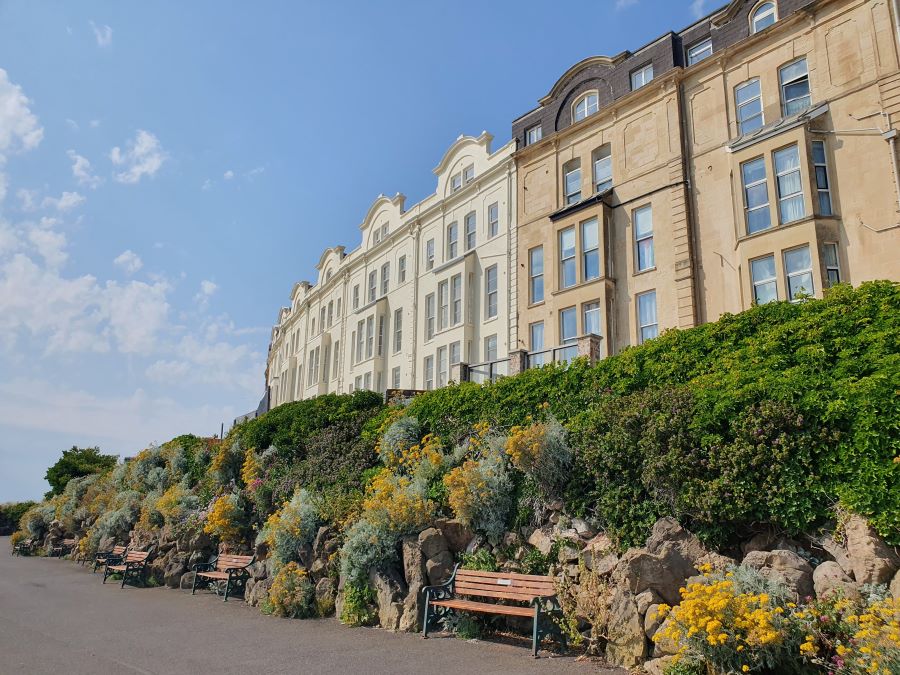
A stroll along the seafront is both scenic and interesting. Weston’s decades of popularity as a seaside resort have left a legacy of period buildings, from the Winter Gardens on the promenade to the curving rows of tall, peeling guest houses and hotels. One of the most intriguing sights is Knightstone Island, between the harbour and the Marine Lake. Some charming, ornate (and until recently picturesquely-dilapidated) buildings cluster on this little promontory, which has recently been redeveloped as a luxury complex.
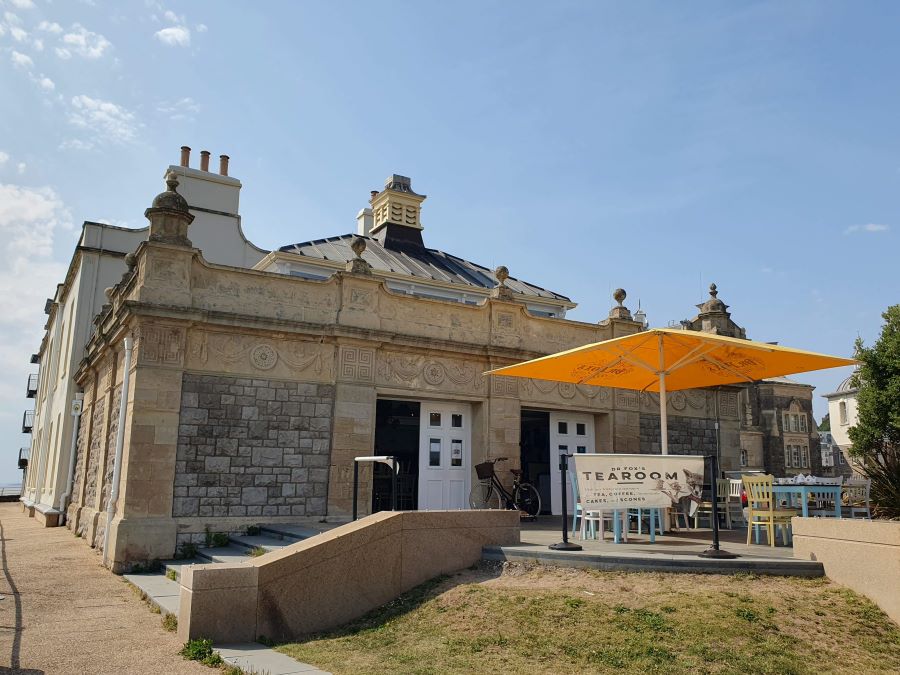
Past the Marine Lake, several small cafes compete for business away from the hubbub of the beach, while visitors stroll along a path above the rocky seashore. The little rocky cove here, overlooked by café tables, has a Mediterranean air, and is light years away from the tawdrier bustle of the main prom. Just past Anchor Head is an even more picturesque vision: the tumbledown stretch of Birnbeck Pier, an abandoned and haunted old pleasure-pier. At the time of writing, a restoration project has finally got under way to preserve this historic attraction.
If you want to see further than the centre of Weston, there is an open top bus service (in season) which runs along the coast to Sand Bay, making a pleasant excursion. Active visitors will find good walking opportunities in either direction along the coast. There are also boat trips to the nature reserve of Steep Holm Island, a small rocky island in the Bristol Channel.
For more traditional seaside activities, you could visit the town’s aquarium, play a round on a putting green, enjoy chips on the seafront, and watch (or have a go at) wind sports, volleyball and kite-flying. Most adult residents of Bath and Bristol probably have fond memories of childhood trips to the beach and riding on the donkeys at Weston-super-Mare. The tradition of donkey rides on the beach goes back to the 19th century.
If you have an appetite for more than seaside fun, I’d recommend starting your visit to Weston at the town’s excellent museum, Weston Museum. Here you’ll learn about the history of the area, from its underlying geology to Weston’s growth from a village to a popular and expanding seaside resort. A series of sketches and paintings illustrates the changes that took place over the eighteenth and nineteenth centuries, providing historical context which really adds to a tour of Weston-super-Mare. Other museum highlights include a 1900s cottage interior, two historic dolls’ houses, good fossils and archaeological finds from Worlebury Hill Fort (at the northern edge of of the town) and other local sites, including Roman discoveries.
Weston is good at catering for its visitors – there are plenty of facilities including fine public toilets, drinking water taps and free organised children’s activities in the summer holidays.
Travel information
Weston-super-Mare is well-connected by public transport and ideal for car-free travellers. This is, of course, one of the features which have made it such a magnet to residents of a wide inland area.
It’s simple and quick to reach Weston-super-Mare from Bath. Trains run from Bath Spa railway station approximately hourly. Some are high-speed direct trains, others require a change in Bristol. The journey takes around 50 minutes. The seafront in Weston is a short walk from the railway station, and is signposted.
Weston and the surrounding area are served by local buses run by First Bus and Badgerline. Note that (I haven’t tested this) the First bus services in Weston, including the Coaster buses, should be included in First West of England bus day tickets and so the cost of your travel in Bath and Weston on their services should capped accordingly.
Accommodation
Want to spend the night in Weston-super-Mare? The resort has quite a good selection of hotels, B&Bs and apartments, many with sea views.
> Weston-super-Mare accommodation (Booking.com)